
Received an ADA website lawsuit or demand letter? Don’t panic.Act quickly with Ally.
An ADA website lawsuit can feel overwhelming, especially if this is the first time your business has been accused of having an inaccessible website.
The most important thing is to move fast, document everything, and bring in the right expert support. Most website accessibility claims are tied to issues like missing image alt text, poor keyboard navigation, inaccessible forms, broken screen reader support, low color contrast, or PDFs and online tools that people with disabilities cannot use.
Ally helps organizations understand what is wrong, prioritize fixes, and remediate accessibility issues against WCAG standards.
Need help now? Schedule an ADA website lawsuit response review.
Schedule a Call-
4.6 thousand
In 2023, 4,605 federal lawsuits were filed under ADA Title III for inaccessible websites.
Seyfarth Shaw LLP, ADA Title III Lawsuit Report (2023) -
983
lawsuits filed against businesses using overlay widgets in a single tracking year.
UsableNet ADA Lawsuit Tracker (2024) -
26 percent
1 in 4 U.S. adults live with some form of disability, representing a significant portion of users.
CDC, Disability Impacts All of Us (2023)
What to do after receiving an ADA website lawsuit
-
1
Do not ignore the lawsuit or demand letter
ADA website claims often come with deadlines. Ignoring them can make the situation worse. Send the notice to your attorney and begin documenting your response immediately.
-
2
Preserve your current website
Before making major changes, capture the current state of your website. Save screenshots, HTML, page templates, plugins, themes, PDFs, third-party tools, and any accessibility scans you already have.
-
3
Get a real accessibility audit
Automated scans are helpful, but they are not enough. Many ADA website claims involve issues that require manual testing, including keyboard access, screen reader behavior, form errors, focus order, and navigation.
-
4
Prioritize high-risk barriers first
Missing alt text, broken keyboard navigation, and unlabeled forms are the most cited issues. Fix these before anything else to demonstrate good faith.
-
5
Create a remediation plan
A strong response plan should show that your organization is taking accessibility seriously. Your plan should include what was tested, what issues were found, who is fixing them, and when they will be resolved.
-
6
Fix the actual code, not just the appearance
Accessibility overlays and widgets may seem like a quick fix, but they rarely address the underlying issues. True accessibility requires fixing the source code, including semantic structure, ARIA, forms, labels, navigation, color contrast, PDFs, media, and interactive components.
-
7
Retest and document the work
Once fixes are complete, retesting matters. You need evidence that the issues were addressed and that the website is moving toward accessibility compliance. A clear paper trail of your remediation work is your best protection against repeat lawsuits and serial plaintiffs.
Common ADA website lawsuit issues we find
Many claims are tied to the same core accessibility problems. These issues are fixable, but they need to be handled carefully.

- Website cannot be navigated with a keyboard
- Missing or incorrect image alt text
- Error messages are not announced to screen readers
- Buttons and links are not descriptive
- Color contrast is too low
- Popups or menus trap keyboard users
- PDFs are not accessible
- Videos lack captions or transcripts
- Checkout or application flows are inaccessible
- Mobile touch targets are too small
How Ally helps after an ADA website lawsuit
Ally supports businesses, credit unions, healthcare organizations, and other teams that need practical accessibility help fast.
Our process includes:
Accessibility Audit

We review your website against WCAG 2.2 AA and identify accessibility barriers that may create legal and usability risk.

Remediation Roadmap

We prioritize the issues and give your team a clear plan for what needs to be fixed first.
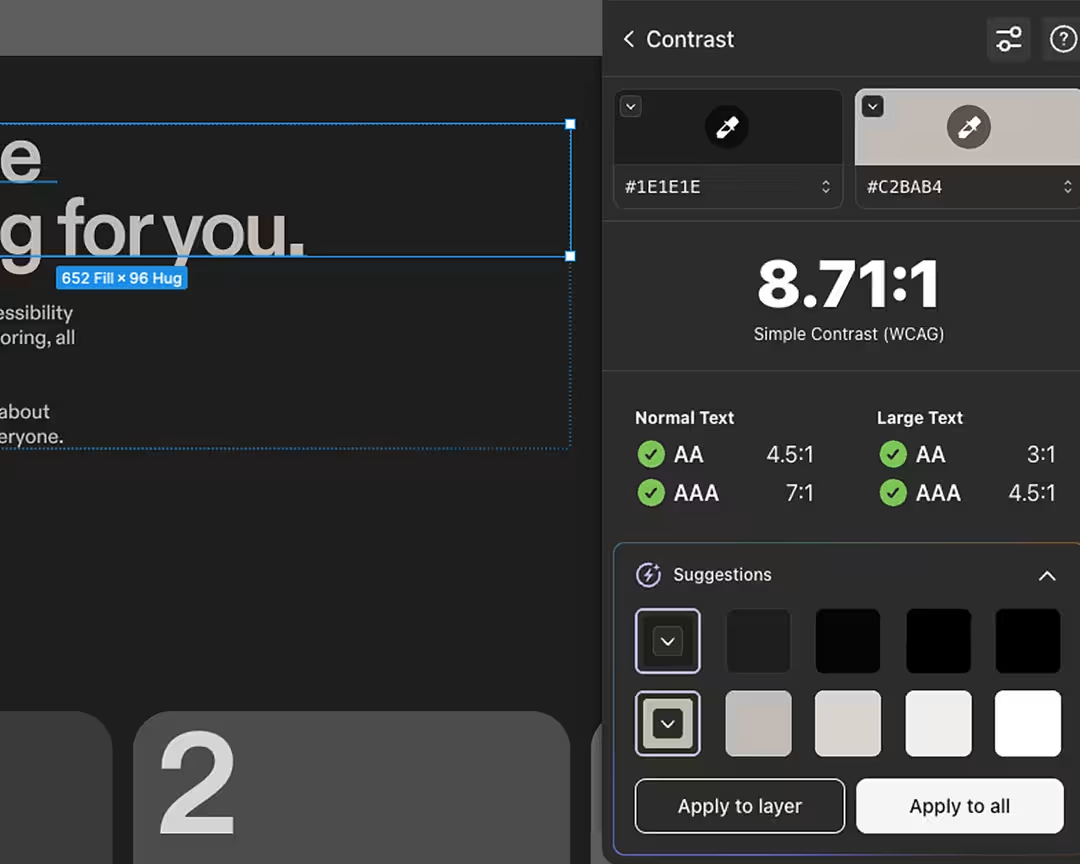
Code-level Remediation

We help fix the actual accessibility problems in your website, not just add a widget on top.

Validation Testing

After remediation, we retest key pages and user flows to confirm improvements.

Ongoing Monitoring

Accessibility is not a one-time project. We help you maintain compliance as your website changes.
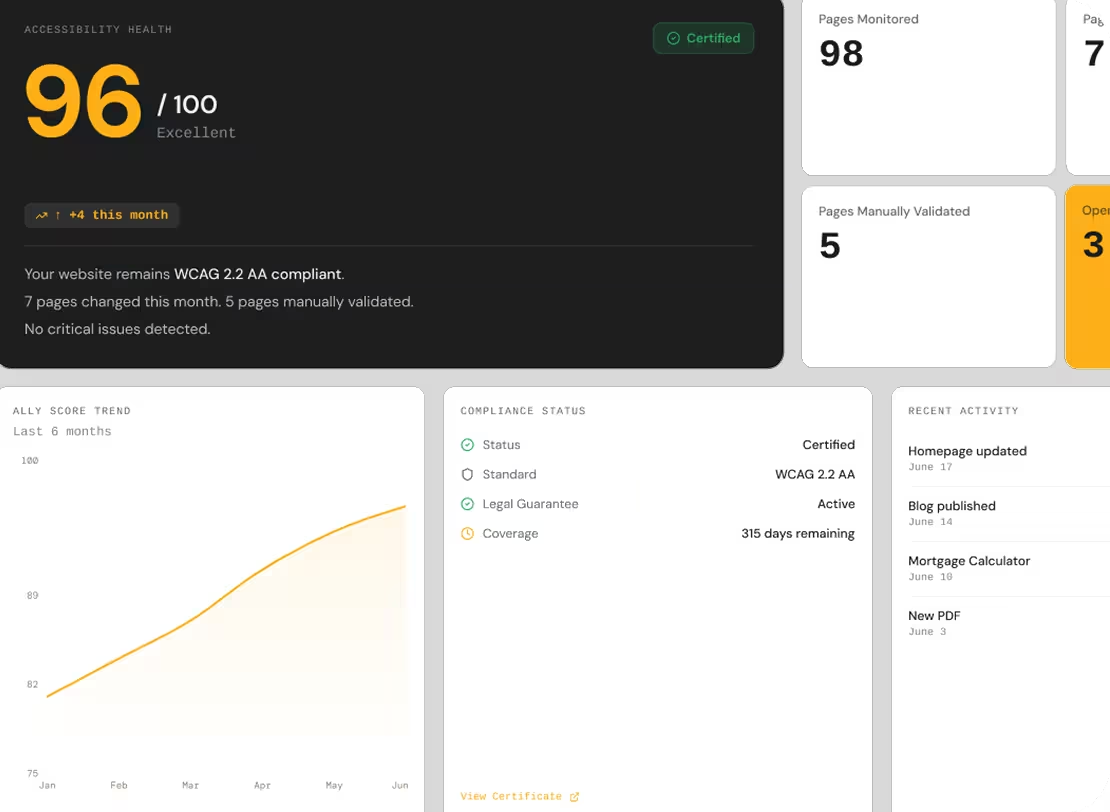
ADA website lawsuit response support
If you received a lawsuit, demand letter, or accessibility complaint, the best next step is to quickly understand your exposure and start fixing the issues.
Ally can help you answer:
-
What accessibility issues exist on our website?
-
Which issues are highest priority?
-
What needs to be fixed first?
-
Can our current agency or dev team handle this?
-
Do we need manual testing?
-
How do we document remediation?
-
How do we reduce future risk?

Frequently Asked Questions

Get your free ADA response review
Tell us about the letter you received. We'll review it and tell you exactly where you stand — no commitment required.
No sales pitch · Response within 1 business day
End-to-end accessibility services with a white glove approach.
With Ally, you get a trusted partner for compliance, better user experiences, and peace of mind.