


Accessible vs. Inclusive vs. Universal Design: What’s the Difference?
Good design should not make people work harder just because they interact with the world differently.
Terms like accessible design, inclusive design, and universal design are often used interchangeably. They are closely connected, but they focus on different things. Understanding the difference helps us create experiences that work better for a wider range of people, not just meet a checklist.
Accessible Design: Removing Barriers
Accessible design focuses on making a product or experience usable by people with disabilities. It asks:
“Can people with different disabilities use this?”
For example, adding alternative text to an informative image can help a screen reader user understand its purpose. Providing sufficient color contrast can help people with low vision read content more easily.
Accessibility focuses on identifying and removing barriers that can prevent people with disabilities from accessing or using a product or experience.
Inclusive Design: Considering Different People
Inclusive design goes a little broader. It considers the different ways people may interact with a product based on their abilities, experiences, preferences, language, age, environment, or circumstances.
It asks:
“Who might be left out of this experience?”
For example, a form that requires users to type their full address may create unnecessary difficulty for someone with limited dexterity, someone using voice input, or someone who simply does not know the expected format. Offering address suggestions while still allowing users to enter or correct information manually gives people more than one way to complete the task.
Inclusive design encourages us to think about differences before they become barriers.
An inclusive approach encourages us to look beyond technical compliance and ask whether the overall experience works for different people.
Universal Design: Designing for a Wider Range of People From the Start
Universal design aims to create products and environments that are usable by the widest possible range of people from the start, reducing the need for later adaptations.
It asks:
“Can we design this from the beginning so that more people can use it?”
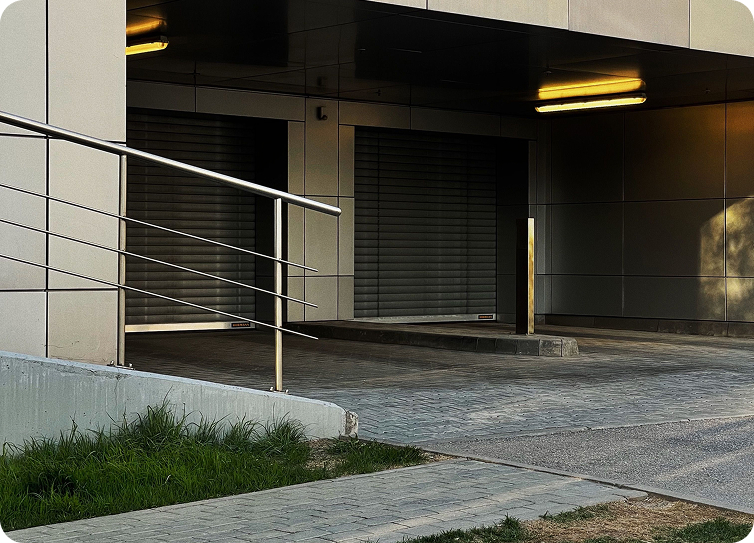
A good example is a ramp at a building entrance. It can support wheelchair users, but it can also help someone using a stroller, carrying luggage, or temporarily unable to use stairs comfortably. The benefit is not limited to one group.
The same principle can apply to digital experiences. For example, captions on a video can support people who are deaf or hard of hearing, but they can also help someone watching the video in a noisy environment or without sound.
So, What's the Difference?
Think of them as three connected approaches:
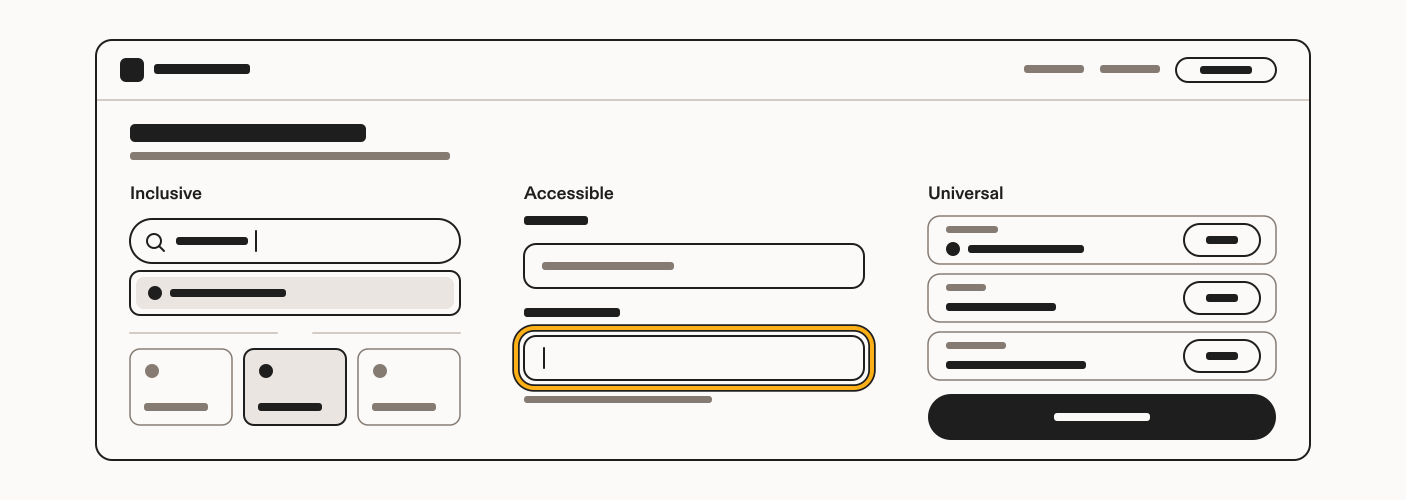
- Accessible: Remove barriers that may prevent people with disabilities from using a product or experience.
- Inclusive: Consider a wide range of people, abilities, experiences, preferences, and circumstances.
- Universal: Design from the beginning to be usable by the widest possible range of people.
These approaches are not competing options, and one does not replace the others. Accessibility remains essential, while inclusive and universal design encourage us to think more broadly about different users and situations.
A website can be technically accessible but still feel difficult or confusing to use. An inclusive approach encourages us to look beyond technical compliance and ask whether the overall experience works for different people. Universal design encourages us to consider those differences early, rather than designing for one group first and adapting the experience later.
Accessibility makes the door usable. Inclusion asks who might still be left out. Universal design asks whether we can build the entrance so that more people can use it comfortably in the first place.
That shift from fixing barriers to anticipating differences is what makes design truly people-centered.